Half-robots?
Imagine: You're shambling down the avenue. Bluetooth stuck to your ear, thumbs-a-Twitter. Your GPS-enabled phone is piloting you to a meet-up with your soccer buddies, but the lecturer's IM interrupts with a snarl about your assignment so now you're pondering a new spin on "the dog ate my homework."
Meanwhile your calendar is pleading about overdued rentals. And at this moment, that girl from your high-school pings: She's friend-ing you on Facebook.
And with so much tech people are lugging around these days, should we consider ourselves robots? or maybe cyborgs?
What's the diff?
When most people think "cyborg", they're referring to a "humanoid robot", as in Chii from the anime Chobits.
Real cyborgs (as opposed to fictional) are more frequently people (or animals) who use cybernetic technology to repair or overcome the physical and mental constraints of their bodies. While cyborgs are commonly thought of as mammals, they can be any kind of organism.
Yes, even a person using a working, movable prosthetic limbs are considered as cyborg.
Robot sex?
That's an issue that will arise when we start developing very life-like humanoid robots. Something for the future generations to ponder on.
When people think of robot-human sexual relationship, instantly they think of social suicide. "Oh my goodness! We're all going to vanish!" We will have billions of people on Earth, more than we have ever had prior to this century! And through all of history before, we've had lower populations.
No one worried that we'd vanish from the Earth! And besides, if it looked as though we were going to vanish from the Earth, all that has to happen is the word goes out: have babies. And you'd be surprised how fast we can make it up. *winks*
What about technology for reproducing robots? It is still in its infancy. Self-replicating robots is by-product from the study on creating self-repairing robots.
Watch this. http://www.youtube.com/watch?v=VyzVtTiax80
Note: read my previous post on Mecha-musume.
Half-humans?
First, you need to know that there's a different between a humanoid robot and a humanoid cyborg. The former is a robot that looks like human. While the latter is a human that is enhanced with technology.
Cyborgs already exist in the real world. The fact that I can't live without my laptop or cellphone, has already made me a "honourary" cyborg.
Lets say if a person was born without limbs, but had his body supported by robotic arms and legs. Would it make that person any less human? Because of the fact he has robotic limbs or because he was born without limbs?
For millennia, great men have debated on what it actually means to be human, and the answer still inconclusive. We, however, can't judge a person's humanity based on physical values or appearances.
... continue reading
18 July, 2009

03 May, 2009
Foresight
Humanoid robots, teleportation, anti-matter, hyper-space, worm holess, artificial intelligence, parallel universes, higher dimensions, animal hybrids, cyborgs, immortality, ESP, time travel.
Sound like badly written science fiction? Fret not! This is modern science. Things like these are constantly being investigated, discovered, researched at laboratories and institutions worldwide.

Decades ago, talking about stuff such as parallel universes and time travel, guarantees you instant career suicide. But with increasing global recognition, scientists now have the freedom to testing the boundaries of our imagination, and their papers are subjected to serious peer reviews.
Things like worm-holes and cyborgs now belong to the realm of scientific facts. What we have achieve is only on the tip of the iceberg. Science as we know it, is only in its infancy. And there are better things to come, but not all in our lifetime. So, don't start your bets yet.
I usually spend my time scouring through reports from scientific community for any exciting news. Much of my blog will be dedicated to these latest on-goings. Breaking-down complex ideas into digestible bits for you readers (if I'm free, though).
That's all for now.
Zooming out~!
... continue reading
Sound like badly written science fiction? Fret not! This is modern science. Things like these are constantly being investigated, discovered, researched at laboratories and institutions worldwide.
Decades ago, talking about stuff such as parallel universes and time travel, guarantees you instant career suicide. But with increasing global recognition, scientists now have the freedom to testing the boundaries of our imagination, and their papers are subjected to serious peer reviews.
Things like worm-holes and cyborgs now belong to the realm of scientific facts. What we have achieve is only on the tip of the iceberg. Science as we know it, is only in its infancy. And there are better things to come, but not all in our lifetime. So, don't start your bets yet.
I usually spend my time scouring through reports from scientific community for any exciting news. Much of my blog will be dedicated to these latest on-goings. Breaking-down complex ideas into digestible bits for you readers (if I'm free, though).
That's all for now.
Zooming out~!
... continue reading
01 May, 2009
Revolution of Data Storage
What will be the future of DVDs?
We are already adopting Blu-Ray and HD-DVD formats. Storage space for hard-drives has reached the terabyte (TB) mark. So what else is new? There's a limit to how much data you can store on a disk. I doubt that the magnetic and optical data storage that we use today would continue to exist in the future.
Well, what about flash-drives? They are solid-state, silicone-based storage but there's also a limit to this technology. Every year, your flash-drives (pen/thumb-drives) can store almost twice as much as they were the previous year. This can't go on forever, because Moore's Law isn't sustainable as believed.
Holographics: The next step
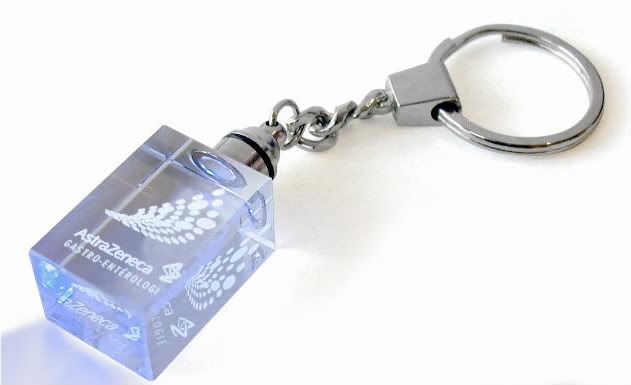
Envision the day where all data will be stored in crystals/crystalline materials. In the future, we will need to store data of times past for times ahead, lots of it. CD's and DVD's will rot, data formats will become unreadable, new technologies are needed.
Holographic crystals can store up to 200 DVD's worth of information for up to 1000 years as digits or as microscopic images. Data could be etched into these small crystals using a highly-tuned precision laser.

How it works?
Magnetic and optical data storage works by having individual bits being stored as distinct changes on the (2D) surface of the recording medium. This only records information a bit at a time in a linear fashion.
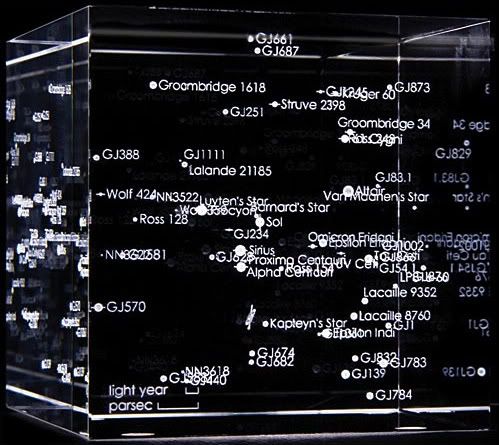
Holographic data storage records information throughout the (3D) volume of the medium. This enables it to record multiple images in the same area utilizing light at different angles. Holographic storage is capable of reading and writing millions of bits in parallel, giving faster data transfer rates.

See also:
http://www.youtube.com/watch?v=R-NllWcgrFg
... continue reading
We are already adopting Blu-Ray and HD-DVD formats. Storage space for hard-drives has reached the terabyte (TB) mark. So what else is new? There's a limit to how much data you can store on a disk. I doubt that the magnetic and optical data storage that we use today would continue to exist in the future.
Well, what about flash-drives? They are solid-state, silicone-based storage but there's also a limit to this technology. Every year, your flash-drives (pen/thumb-drives) can store almost twice as much as they were the previous year. This can't go on forever, because Moore's Law isn't sustainable as believed.
Holographics: The next step
Envision the day where all data will be stored in crystals/crystalline materials. In the future, we will need to store data of times past for times ahead, lots of it. CD's and DVD's will rot, data formats will become unreadable, new technologies are needed.
Holographic crystals can store up to 200 DVD's worth of information for up to 1000 years as digits or as microscopic images. Data could be etched into these small crystals using a highly-tuned precision laser.
How it works?
Magnetic and optical data storage works by having individual bits being stored as distinct changes on the (2D) surface of the recording medium. This only records information a bit at a time in a linear fashion.
Holographic data storage records information throughout the (3D) volume of the medium. This enables it to record multiple images in the same area utilizing light at different angles. Holographic storage is capable of reading and writing millions of bits in parallel, giving faster data transfer rates.
See also:
http://www.youtube.com/watch?v=R-NllWcgrFg
... continue reading
18 April, 2009
QR Code
Have you seen something like this before?

If it looks familiar, you have probably seen it on a product packaging.
This is a QR Code. A sort of matrix code or 2D bar code created by Japanese corporation Denso-Wave in 1994. It is named "QR" short for "Quick Response", as it was created to be decoded at high speed.
Another quirky invention of the Japanese?
Why not stick with using bar codes?
As we all know, bar codes are widely popular because of their reading speed, accuracy, and superior functionality. As bar codes became popular and their convenience universally recognized, the market began to look for new ways of storing more information, and could be printed in a smaller space. As a result, the QR code was born!
It then became an instant hit with the Japanese popular culture. Most current Japanese mobile phones can read this code with their camera. QR Codes are now used in a much broader applications, including commercial tracking and convenience-oriented servives aimed at mobile phone users.
QR Codes can store addresses, URLs, emails, phone numbers, SMS text message, and many other functions. These codes are usually printed in magazines, on signs, buses, business cards or on any products that users might need information about. Users with a camera phone equipped with the correct software can scan the image of the QR Code.
Here's a tool to create your own custom QR code: QR-Code Generator
Download and install this QR-Code Reader onto your mobile phone.
PS: Try decoding the above image with your own camera phone. Yes, it even works on LCD screens! Special thanks to Dominic for the reader links.
... continue reading
If it looks familiar, you have probably seen it on a product packaging.
This is a QR Code. A sort of matrix code or 2D bar code created by Japanese corporation Denso-Wave in 1994. It is named "QR" short for "Quick Response", as it was created to be decoded at high speed.
Another quirky invention of the Japanese?
Why not stick with using bar codes?
As we all know, bar codes are widely popular because of their reading speed, accuracy, and superior functionality. As bar codes became popular and their convenience universally recognized, the market began to look for new ways of storing more information, and could be printed in a smaller space. As a result, the QR code was born!
It then became an instant hit with the Japanese popular culture. Most current Japanese mobile phones can read this code with their camera. QR Codes are now used in a much broader applications, including commercial tracking and convenience-oriented servives aimed at mobile phone users.
QR Codes can store addresses, URLs, emails, phone numbers, SMS text message, and many other functions. These codes are usually printed in magazines, on signs, buses, business cards or on any products that users might need information about. Users with a camera phone equipped with the correct software can scan the image of the QR Code.
Here's a tool to create your own custom QR code: QR-Code Generator
Download and install this QR-Code Reader onto your mobile phone.
PS: Try decoding the above image with your own camera phone. Yes, it even works on LCD screens! Special thanks to Dominic for the reader links.
... continue reading